

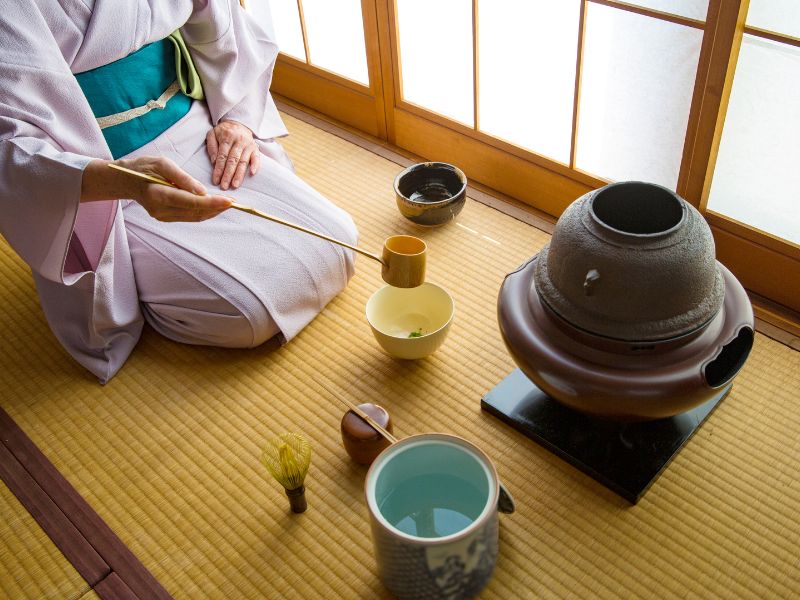
A traditional Japanese tea ceremony is one of the simplest ways to experience Japanese culture aside from temples, shrines, and sightseeing checklists. While much of travelling in Japan can feel fast paced and crowded, this is an experience focusing on slowing down and paying attention to small details. So if you are travelling in Japan, here’s how to experience a traditional Japanese tea ceremony.
You might be worried about etiquette or assume you need background knowledge before attending. You don’t. Most tea ceremonies welcoming travellers are designed for beginners, with hosts guiding you gently through each step.
Rather than a performance, the ceremony is a cultural practice centred on hospitality, mindfulness, and respect. Knowing what to expect beforehand allows you to relax and enjoy the experience once you’re there.
Here’s what a Japanese tea ceremony is, what happens during one, and how you can experience it during your trip to Japan.
What Is a Japanese Tea Ceremony?
A Japanese tea ceremony, often called chanoyu/sadō or “the Way of Tea,” is a traditional practice focused on preparing and serving matcha, a powdered green tea. But the experience is more about the atmosphere created around the tea than about the tea itself.
The ceremony evolved over centuries and is influenced by Zen philosophy, which values harmony, respect, purity, and tranquility (wabi-sabi). Every detail has intention behind it. The arrangement of the room, the utensils used, and even the host’s movements follow a structure refined over generations.
That might sound formal or intimidating, but as a guest you are not expected to know any rules. Most ceremonies welcome first-time visitors, and hosts usually explain what to do as you go. Think of it as being invited into a quiet cultural moment rather than attending something you need to fully understand.
What often surprises travellers is how calm the experience feels. After navigating busy train stations and packed sightseeing days, sitting in a quiet tatami room and watching tea prepared slowly can feel unexpectedly grounding. Many people leave feeling relaxed without quite knowing why.
What Happens During a Tea Ceremony?
Every tea ceremony is slightly different depending on the host and setting, but most follow a similar rhythm. Knowing what to expect beforehand helps you relax and enjoy the experience instead of worrying about doing something wrong.
Arrival and Introduction
When you arrive, you’ll usually enter a traditional tatami room and remove your shoes before stepping inside. The space is often minimal and quiet, creating an immediate contrast with the outside world.
The host greets guests and explains how the ceremony will unfold. Experiences designed for travellers often include English explanations, so you won’t feel lost. Seating is typically on the floor, though many venues offer chairs if sitting cross-legged is uncomfortable. Hosts are very used to international visitors and are generally accommodating.
Seasonal Sweets Are Served
Before the tea is prepared, you’ll be served a small Japanese sweet called wagashi. These sweets are carefully chosen to reflect the season and are sometimes shaped like flowers or natural elements connected to the time of year.
You eat the sweet first, which may feel unusual if you’re used to dessert coming later. The reason is simple. The sweetness balances the natural bitterness of matcha and makes the tea taste smoother.
The Tea Preparation
The preparation of the tea is the main part of the ceremony. The host cleans each utensil slowly and deliberately before making the tea. Every movement is precise but unhurried. Guests usually sit quietly and observe, noticing details like the sound of the whisk or the way the bowl is handled.
Hot water is added to matcha powder and whisked into a bright green, lightly frothy drink using a bamboo whisk.
Drinking the Tea
When the tea is served, the host will guide you through simple etiquette. One common practice is turning the bowl slightly before drinking as a sign of respect. There is no pressure to get this perfect. Hosts expect guests to be unfamiliar and will gently demonstrate what to do.
Matcha often tastes stronger and more earthy than people expect at first. Some enjoy it immediately, while others need a few sips to adjust. The sweet you ate earlier helps balance the flavour, and together they make more sense than either would on its own.
Appreciation and Closing
After everyone finishes, the host may introduce the utensils or answer questions. The ceremony ends quietly, without applause or formality. Many visitors notice they feel calmer than when they arrived, as if the experience created a brief pause in an otherwise busy day.
Are You Ready to Experience a Traditional Tea Ceremony in Japan?




0 Comments