

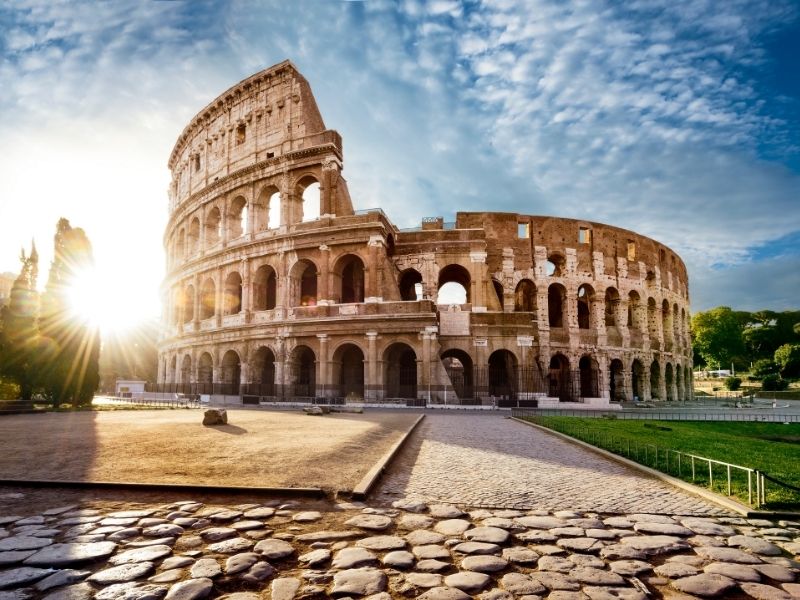
The Colosseum is probably one of the most recognisable landmarks in the world. Even if you’ve never been to Rome, you’ve almost certainly seen photographs of its enormous stone arches rising above the city. And now, you plan to see the Colosseum and other historical Roman buildings.
When you finally visit Rome, one of the first places you will want to see and visit is the Colosseum but you will need to ask yourself, do I need to pay to see the Colosseum. Well, yes and no. There are both free and paid options to see and visit the Colosseum. And here they are.
Ready to See the Colosseum, Roman Forum & Palatine Hill?
Purchase a ticket to visit all three.
Book Accommodation in the centre of Rome so you can walk to many of the sites.
Free Ways to See the Colosseum
If you want to see inside the Colosseum, you will need to buy a ticket, however, if you are wanting to see the Colosseum for free, you can walk around the outside, photograph it from several viewpoints and come back after dark to see it illuminated without paying anything.
Walking around the Colosseum helps you understand its size and place within the surrounding ruins.
Places to See the Colosseum for Free
There are a number of great places to see the Colosseum for free. Here’s some suggestions.
TIP: Read where you can see the Colosseum for free, get a map and plot your course as it is easy to navigate by walking.
Piazza del Colosseo
The easiest place to begin is Piazza del Colosseo, the large public area surrounding the amphitheater. From here, you can walk around much of the exterior and examine the arches, columns and weathered stonework. One side keeps more of its original outer wall, while other sections expose the inner structure. Standing close provides a great sense of scale.
The area becomes extremely busy during the day, especially near the Metro station and main entrance. Visit early in the morning if you’d like fewer people around. Late afternoon is another good option, although the crowds are usually heavier.
Via Nicola Salvi
For a raised view, walk towards Via Nicola Salvi near the Colosseo Metro station. The pedestrian area above the road faces the Colosseum, giving you enough distance to see more of its curved outer wall. It’s a popular photo spot because you can fit more of the building into one frame without standing directly beneath it. It gets crowded, but most people take a few photographs and move on quickly.
This is also a good place to return to after dark, when the illuminated arches stand out above the road.
Via dei Fori Imperiali
Via dei Fori Imperiali is the broad avenue connecting Piazza Venezia with the Colosseum. Walking along it is one of the simplest ways to see how the Colosseum fits into the wider archaeological area. You’ll see the amphitheater at the far end of the avenue, while sections of the Imperial Forums appear on either side. The building seems to grow as you approach, eventually dominating the street.
If it’s your first visit to Rome, I think this approach feels more satisfying than stepping out of the Metro station beside it.
There are several places along the avenue where you can stop and look down towards columns, foundations and fragments of former temples. It’s easy to forget that the road cuts through what was once a dense part of ancient Rome, so looking over the railings adds useful context before you enter the ticketed sites.
Oppian Hill and Parco del Colle Oppio
Parco del Colle Oppio, or Oppian Hill Park, sits above the Colosseum on the northeastern side. The park has trees, benches and ancient ruins, making it useful when you need a break from the crowds.
The Arch of Constantine
The Arch of Constantine stands beside the Colosseum and can be viewed without buying a ticket. Its position makes it easy to photograph both structures together, but the arch is worth examining on its own. Its surface is covered with carved figures, battle scenes and decorative panels. Some panels were reused from earlier Roman monuments, so the carving styles vary. The area becomes congested with tour groups during the day. Early morning is the easiest time to look at the details without people constantly crossing in front of you.
See the Colosseum at Night for Free
One of my favourite ways to experience the Colosseum is after dark. The building is illuminated in the evening, and the rows of arches stand out against the night sky. The roads remain busy, but the area feels less rushed once the larger tour groups leave.
You can circle the exterior, return to Via Nicola Salvi or approach along Via dei Fori Imperiali. I did this after dinner – walking helped my digestion!
Paid Options: Exploring Inside the Colosseum
Seeing the Colosseum from outside gives you a clear idea of its size. Going inside helps explain how the amphitheater worked.
Standard admission generally includes the Colosseum, Roman Forum and Palatine Hill, although the exact areas depend on the ticket you choose. Tickets often require timed entry, so booking ahead is recommended during busy periods.
Standard Colosseum Entry
A standard ticket will suit most first-time visitors. After security, you’ll follow a route through the surviving corridors and viewing levels, looking across the arena and down into the underground structures.
Inside, you can see:
● Surviving sections of the seating levels
● Internal passageways and arches
● The arena area from above
● The underground structures
● Displays explaining the building’s history
● Views towards the Roman Forum
The original seating has mostly disappeared, but the entrances, stairways and corridors still show how carefully the building was organised. The surviving layout shows how the Romans moved thousands of spectators through the building.
The Arena Floor
Some tickets include access to a reconstructed section of the arena floor. Standing there means looking up towards the seating areas from where public spectacles once took place. The original wooden floor hasn’t survived, but the reconstructed platform shows how the central space looked before the underground chambers were exposed.
I think it’s worth adding when the price difference isn’t too big.
The Underground Area
The underground section, known as the hypogeum, contained corridors, holding areas and equipment used to move people, animals and scenery into the arena.
Access is limited and usually requires a specific ticket or guided tour.
This is where much of the work happened out of sight. Animals, performers and equipment were prepared below before being brought into the arena through trapdoors and lifting systems.
I’d choose it if you’re curious about what happened behind the scenes. Otherwise, standard entry still lets you see much of the structure from above.
The Upper Levels
Selected tickets and tours may include access to higher sections of the Colosseum. From above, you’ll get a wider view across the amphitheater and towards the Roman Forum, Palatine Hill and central Rome. The height also shows how steeply the seating once rose around the arena.
Availability can change because sections regularly close for conservation. Check exactly which level is included before buying a ticket, as tour descriptions don’t always use the same names.
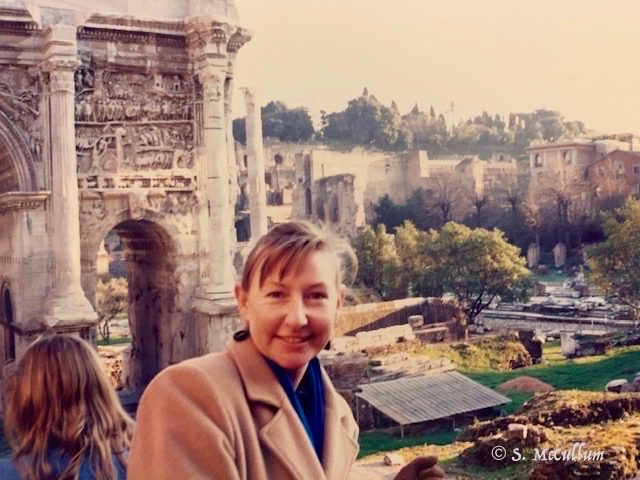
Sharyn (me) checking out the Roman ruins
The Roman Forum
The Roman Forum is right next to the Colosseum and is part of the Parco Archaeologico del Colesseo. A single admission ticket usually covers entry to the Colosseum, the Roman Forum and Palatine Hill.
The Forum was once the political, religious and commercial centre of ancient Rome. Today, the archaeological area contains temples, arches, columns, basilicas and former public spaces.
Some of the main sights include:
● Arch of Septimius Severus
● Temple of Saturn
● House of the Vestal Virgins
● Temple of Antoninus and Faustina
● The Via Sacra
● Remains of ancient basilicas
The site is large, uneven and exposed to the sun. Comfortable shoes, water and sun protection are essential, especially during warmer months. Because many buildings survive only as fragments, an audio guide or map can help. Or when going on a tour, your tour guide will be able to explain lots of details you will miss visiting independently.
Palatine Hill
If you have bought an entrance ticket that includes Palatine Hill you are in for a treat. It rises above the Roman Forum and is traditionally associated with the founding of Rome. It later became one of the city’s most prestigious residential areas, with emperors and wealthy Romans building homes and palaces there. Today though, the hill contains ruins, gardens and several viewpoints. From the higher sections, you can look across the Roman Forum, Circus Maximus and parts of central Rome – I thought this quite spectacular..
Is a Guided Tour Useful?
The Colosseum can be visited independently, especially if you’re comfortable reading signs or using an audio guide. However, much of the original structure is missing. Without explanation, it isn’t always obvious how the surviving walls, entrances and underground spaces fit together. A guide can explain where spectators sat, how events were managed and which details are easy to miss.
A tour isn’t essential, but it can make the remains easier to understand. I’d consider one if you want underground access, prefer a structured visit or don’t already know much about Roman history.
Which Colosseum Experience Should You Choose?
If you’re traveling on a strict budget, you can still see the Colosseum properly without paying for admission. However, going on a tour that includes entrance to the Colosseum, the Roman Forum and Palatine Hill, in my opinion, is well worth it! No matter if you see while on a holiday in Rome or touring Europe on a 1 month Central European itinerary, seeing the Colosseum, Roman Forum and Palatine Hill are well worth your while.
Are You Ready to Visit the Colosseum, Roman Forum and Palatine Hill?




0 Comments