

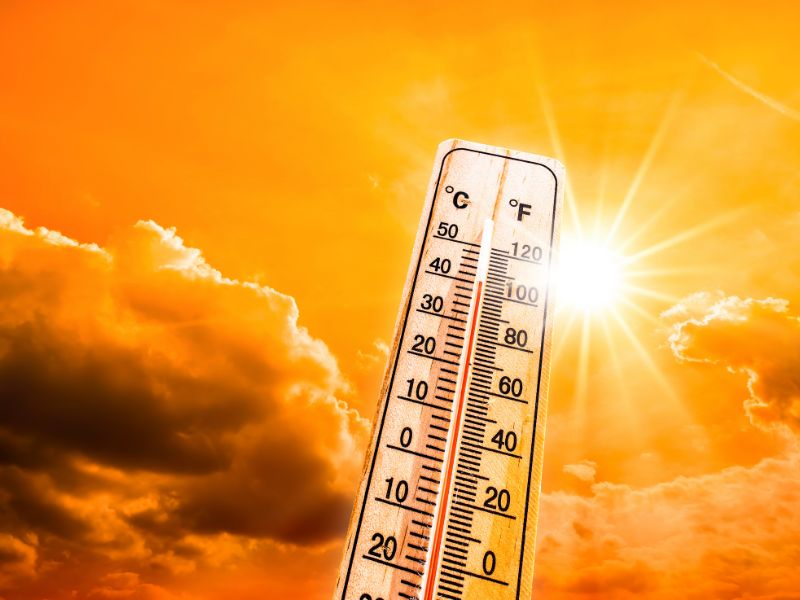
Travelling Europe during the summer months brings many things including heatwaves. And right now, the Europe heatwave is seeing the hottest temperatures ever recorded.
So hot is the heatwave in Europe, people have drowned after swimming in unsafe areas trying to cool off from the heat. Kids have been found dead in their family cars. Schools have closed. Tourist hotspots like the Eiffel Tower in Paris have reduced visiting hours. Infrastructure such as train rails are expanding and buckling – causing a nightmare travelling around Europe. And there is plenty of heat still to come in Europe.
Many Australian’s and people from other hot countries are probably rolling their eyes hearing about the UK heatwave and the Europe heatwave, but what needs to be understood is, the heat in Europe and the UK is different. And the cooling infrastructure is well, non-existent in the UK and Europe.
If you’re traveling in Europe during a heat wave, it’s worth planning differently than you might in cooler seasons. Many buildings—especially older ones—don’t have air conditioning, and temperatures can stay high well into the evening.
What is a Heatwave?
A heatwave is a prolonged period of abnormally hot weather, usually lasting two or more days. It can be accompanied by high humidity. Many countries and regions are use to having heatwaves during the summer months. With climate change, heatwaves are becoming more prevalent and the UK, and Europe are two such regions that are increasingly having extreme hot weather during their summer months.
How to Cope with Heat when Travelling
Here are some practical ways to stay more comfortable:
Stay cool during the hottest part of the day
- Plan outdoor sightseeing for early morning (before about 11 a.m.) or later in the evening.
- Use the hottest hours (roughly noon to 4 or 5 p.m.) for museums, churches, shopping, or a long lunch indoors. Hopefully, these places will have cooling.
Stay hydrated
- Carry a reusable water bottle and refill it frequently. Many European cities have public drinking fountains with potable water.
- Drink regularly, even if you don’t feel thirsty.
- If you’re sweating heavily, consider drinks or foods that replace electrolytes.
Dress for the weather
- Pack appropriately for a summer holiday in Europe.
- Wear loose-fitting, light-coloured clothing made from breathable fabrics like linen or cotton.
- Use a wide-brimmed hat and sunglasses.
- Apply sunscreen (SPF 30+) and reapply every couple of hours if you’re outdoors.
Choose accommodation carefully
- Before booking any accommodation, check specifically whether it has air conditioning—don’t assume it does. Or at least having a fan to circulate the air.
- Check what else the accommodation offers – rooms with shutters or blackout blinds tend to stay cooler. Upper-floor rooms can be significantly warmer than lower floors.
- I always use Booking dot com to book accommodation – I ensure I read reviews and the details about the property to ensure it has everything I need for my stay.
Keep your room cool
If your accommodation doesn’t have air conditioning, help your room to stay cool”
- Close shutters, curtains, and windows during the day to block sunlight and keep heat out.
- Open windows at night if it’s cooler outside.
- Create cross-ventilation if there are windows on opposite sides.
- Turn off unnecessary lights and electronics that generate heat.
Cool your body efficiently
- Wet your wrists, neck, or a small towel with cool water.
- Take cool (not icy) showers.
- Use a handheld fan or battery-powered portable fan.
- If your hotel has AC, spend some time cooling down before going back outside.
- Take a dip in a body of water, even dipping your toes in can help cool you down. Ensure to be safe around any body of water and watch children carefully,
Eat lighter meals
- Opt for salads, fruit, yogurt, and lighter dishes during the hottest parts of the day. Check out Travellers-Fare for fast, fabulous and easy meals for travellers, backpackers and campers for inspiration.
- Heavy meals can make you feel warmer.
- Be mindful of alcohol, which can contribute to dehydration. Throw in heat with alcohol and you can have impaired judgement, reduced physical coordination, prone to accidents, become abusive or become disoriented in public. And there are plenty of pick-pockets in Europe just waiting for such a tourist.
Make use of cool public spaces
Libraries, museums, shopping centres, cinemas, and some cafés can provide relief from the heat, even if they’re only moderately air-conditioned.
Travel on public transport wisely
Walking in direct sun can be exhausting, wear a hat and use an umbrella but also:
- Consider buses, metros, or trams during the hottest hours to get around – hopefully they have cooling.
- Keep water with you while waiting at stations, and basically everywhere during the heat.
Know the signs of heat illness/stress
Excessive heat and lack of water can lead to heat stress or a heat illness. Watch for:
- Dizziness
- Headache
- Nausea
- Excessive fatigue
- Muscle cramps
- Confusion or fainting (this can indicate a medical emergency)
If you, or someone becomes confused, loses consciousness, or has a very high body temperature, seek emergency medical assistance immediately.
Check local heat advisories
Many European countries issue heat alerts with recommendations and may adjust opening hours or public services during extreme heat. Visit their websites or apps for the latest details. Also watch TV and listen to the radio for weather and heat reports.
Be Mindful of Your Things
The heat and being hot can make you forgetful and oblivious to our surroundings. This leads us to being careless with out things. Instead of carrying a hot bag next to our body, we are keen to take it off and leave it over a chair while we eat. An easy target for a robber. Be mindful of your things.
Are You Ready to Stay Cool This European Summer?
I hope these tips help you stay cool and hydrated during your summer European travels and summer UK travels.
Europe Travel Inspiration – 1 Month Central Europe Itinerary
UK Travel Inspiration – 1 Month Britain Itinerary, 1 Month UK and Ireland Itinerary




0 Comments